

STREAM & MakerPlace
Where Diné Teachings Meet Science
Since 1978, Little Singer Community School has served families on the Navajo Nation with a simple belief at its heart: Hooghan Hazʼą́ągi, Kʼé Biníkáágóneʼ, Óltaʼ Bee Hółdzil — empowering our community through family-based education. That belief shapes everything the school does, including how it teaches science and technology.
Learning the Diné Way
At the center of our school is the STREAM program — science, technology, reading, engineering, arts, and math, with wellness woven through all of it. What makes it ours is that the learning follows the Diné way of thinking. Every project moves sunwise through the four directions, each carrying its own color, season of thought, and part of STREAM.
Nitsáhákees
Thinking · reclaiming identity
We begin with kʼé — kinship. Students learn their clans and their ties to self, others, community, and the natural world.
Nahatʼá
Planning · the ethics of Native science
Caring for the Earth, caring for the people, and sharing with respect for all our relations.
Iiná
Living · making & engineering
Investigating, building, and testing — engineering and inquiry come alive through robots, drones, and coding.
Sihasin
Reflection & assurance
Students present and reflect, sharing their work with elders and community, and giving thanks.
The MakerPlace
That philosophy comes to life in our MakerPlace — a makerspace rooted in place, local context, and relationship. The term itself was coined by Dr. Ben Jones, founder of the Keʼyah Advanced Rural Manufacturing Alliance (KARMA), and it captures what we do: technology integrated across STREAM, honoring our students’ funds of knowledge and the intergenerational transfer of knowledge.
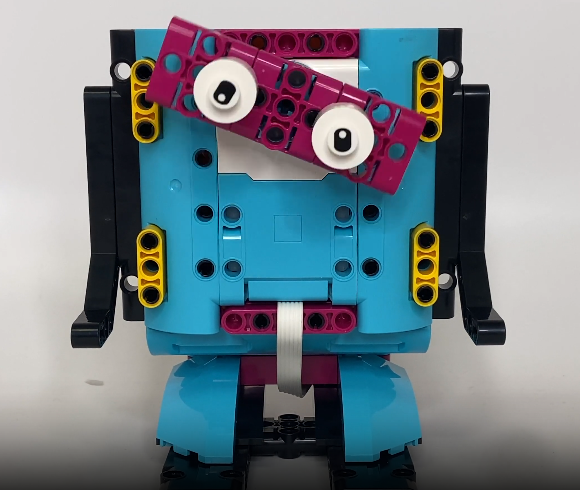
In the MakerPlace, students build and program robots, fly “Dolii” drones with controllers they’ve relabeled in Diné Bizaad, and design greywater filtration systems and wind turbines through the engineering design process. They map their own communities, chart the sun along the horizon, and study land formations to prepare for NASA’s Artemis missions, with astronomy nights alongside Lowell Observatory. Our youngest learners take part too, beginning their STREAM journey in the early-childhood classrooms.
Our Partnership with KARMA
KARMA — the Keʼyah Advanced Rural Manufacturing Alliance — brings culturally relevant K–12 STEM to rural classrooms across the Navajo Nation. Since 2016, KARMA has worked with schools to create career opportunities for Navajo students by bridging STEM practices with Navajo cultural elements such as singing, storytelling, and language. Since 2021, KARMA has collaborated with Tufts University’s Center for Engineering Education and Outreach to advance playful engineering-based learning across the school communities they serve. The term “MakerPlace” itself was coined by Dr. Ben Jones, KARMA’s founder.
What Our Students Achieve
The results speak for themselves. Little Singer students have earned first place at the Navajo Nation Science & Engineering Fair, placed at the Arizona State level, and presented their research — in both Navajo and English — to scientists, elders, and their own community. Their projects apply Native science ethics to real questions: renewable energy, hydrogen fuel cells, water filtration, and biomimicry.
We also share and learn with sister schools around the world — in Mongolia, Nepal, Rwanda, and India — proof that a small rural school can teach the world as much as it learns from it.
At Little Singer Community School, students don’t have to choose between who they are and where they’re going. They carry both.